
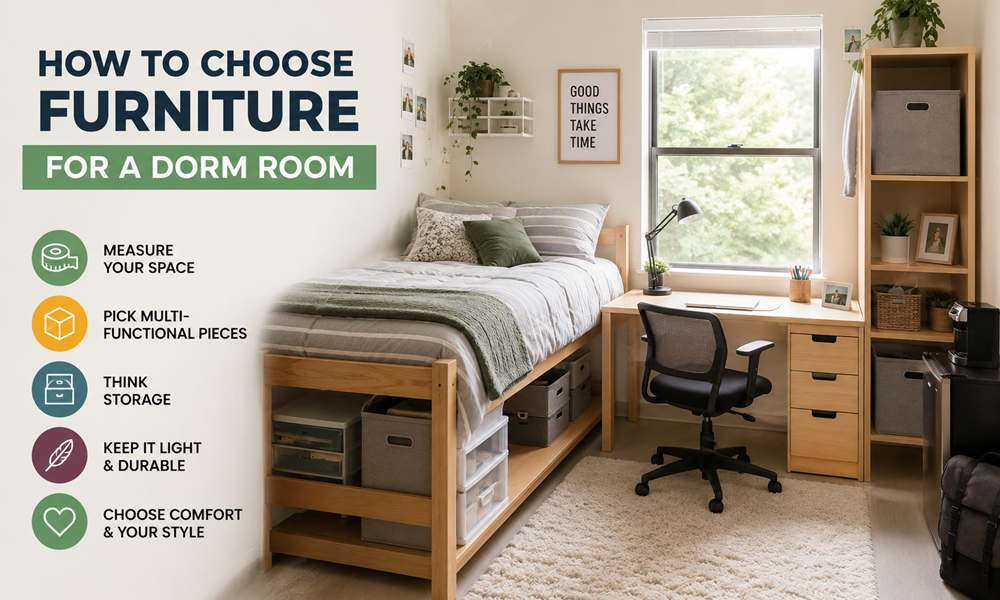

The best way to choose furniture for a dorm room is to prioritize pieces that are compact, multi-functional, and easy to move. Most dorm rooms already come with a bed frame, desk, and closet, so extra furniture should fill real gaps, like storage or additional seating, without eating up limited floor space. Before buying anything, check your school’s furniture policy, since many campuses restrict certain items like upholstered furniture or open-flame appliances.
The Problem: Dorm Rooms Are Small and Rules Vary by School
A typical American dorm room ranges from 130 to 250 square feet, often shared with a roommate. That leaves very little room for extra furniture once the provided bed, desk, and dresser are accounted for. On top of space limits, many universities restrict certain items for fire safety reasons, including upholstered chairs, halogen lamps, and certain storage units, making it easy to buy something that isn’t allowed on move-in day.
The Solution: Multi-Functional, Space-Saving Furniture
Furniture that serves more than one purpose is almost always the better investment for a dorm room. A storage ottoman doubles as seating and a place to stash extra bedding. Under-bed storage bins use dead space that’s otherwise wasted. Folding chairs and stackable crates offer flexibility without a permanent footprint.
What Furniture Do You Actually Need for a Dorm?
Beyond what’s typically provided, most students benefit from a small storage unit, a floor lamp or desk lamp, a shower caddy, and some form of extra seating, like a folding chair or floor cushion. Anything beyond that should solve a specific problem rather than just filling space.
Can You Bring Your Own Furniture to a Dorm?
In most cases, yes, but with restrictions. Schools commonly allow small items like bookshelves, storage bins, and lamps, while banning larger furniture, candles, and certain electrical appliances. Always check your specific school’s housing guidelines before purchasing anything larger than a small side table.
Local Insights: What US Dorms Typically Provide and Restrict
Most US colleges provide a twin XL bed frame and mattress, a desk and chair, and a dresser or closet space as standard. Twin XL is the near-universal dorm bed size, so bedding and any bed-adjacent furniture should be sized accordingly. Many schools also cap the wattage of appliances allowed per room and prohibit nailing or drilling into walls, which makes tension rods, adhesive hooks, and freestanding furniture the safer choice for storage and decor.
A Simple Dorm Furniture Checklist
- Twin XL-compatible bedding and a mattress topper for comfort
- Under-bed storage bins for off-season clothing or bulky items
- A storage ottoman or foldable chair for extra seating
- A compact desk lamp with adjustable brightness
- Adhesive hooks or a tension rod for hanging items without wall damage
- A small, stackable shelf unit for books and supplies
Before buying anything, measure the actual floor space you’ll have after the provided furniture is arranged. Many students overbuy during move-in, only to find there’s no room left to walk once everything arrives.
Frequently Asked Questions
What Furniture Is Usually Provided in a Dorm Room?
Most US dorm rooms include a twin XL bed frame and mattress, a desk with chair, and a dresser or built-in closet. Anything beyond these basics is typically the student’s responsibility to bring.
How Much Should You Budget for Dorm Furniture?
Most students spend $150 to $400 on additional dorm furniture and storage, depending on how much extra seating and organization they need. Sticking to multi-functional pieces helps keep costs down while still covering the essentials.