
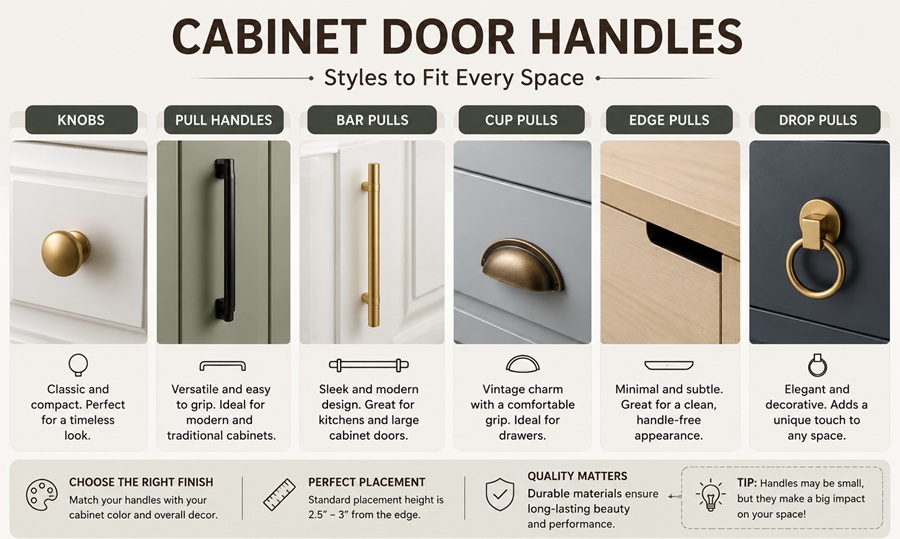

Cabinet hardware gets picked last and noticed first. It’s a small enough purchase that it’s easy to rush at the end of a kitchen project, but it’s also one of the few finishes a hand actually touches every single day, and mismatched or poorly sized hardware tends to stand out more than people expect.
| Quick Answer
Cabinet door handles generally fall into knobs, bar pulls, cup pulls, and edge pulls, in finishes ranging from brushed nickel to matte black and unlacquered brass. Standard bar pulls run 3 to 6 inches for doors and up to 12 inches or more for drawers, with cost typically between $3 and $25 per piece. |
Knobs vs. Pulls: The Core Decision
Knobs are single-point hardware, typically used on cabinet doors where a full grip isn’t necessary. Pulls, or bar handles, span a wider area and are generally easier to grip, which is why many kitchens use pulls on drawers and knobs on doors, or pulls throughout for a more contemporary look.
| Hardware Type | Typical Use | Grip Comfort |
|---|---|---|
| Knob | Cabinet doors | Moderate |
| Bar pull | Drawers, doors | High |
| Cup pull | Drawers, traditional styles | High |
| Edge pull | Handleless/modern doors | Low to moderate |
Matching Hardware to Cabinet Style
Shaker Cabinets
Shaker-style cabinets pair well with almost any hardware style, which is part of why they’ve remained popular for so long. Simple bar pulls or classic round knobs both work without fighting the cabinet’s clean lines.
Modern Flat-Panel Cabinets
Flat-panel or slab cabinets tend to look best with sleek bar pulls or integrated edge pulls, since anything ornate can feel out of place against such a minimal door profile.
Traditional or Ornate Cabinets
Raised-panel or detailed traditional cabinetry often calls for cup pulls or decorative knobs with more visual weight, matching the cabinet’s own level of detail.
Finish Options and Where They Hold Up Best
- Brushed nickel: hides fingerprints well, pairs with most kitchen color palettes
- Matte black: bold contrast against light cabinets, shows water spots more visibly
- Unlacquered brass: develops a living patina over time, appeals to those who like an evolving finish
- Polished chrome: bright and reflective, but shows fingerprints and smudges quickly
- Oil-rubbed bronze: warm, traditional tone, hides daily wear well
| Tip: Bring a sample cabinet door or drawer front to the hardware store, or order a single test piece, before committing to a full-house order. Finishes and proportions can look different in person than in photos. |
Sizing Guide for Pulls
- For narrow cabinet doors, choose 3 to 4 inch pulls to avoid overwhelming the door width
- For standard drawers under 24 inches wide, 5 to 6 inch pulls generally look proportionate
- For wide drawers over 30 inches, consider two smaller pulls or a single 8 to 12 inch pull
- Center pulls vertically on doors and horizontally on drawers unless following a specific design pattern
- Keep hardware placement consistent throughout the kitchen for a cohesive look
Budget Planning
| Hardware Tier | Cost per Piece | Typical Kitchen Total (30 pieces) |
|---|---|---|
| Budget | $2–$6 | $60–$180 |
| Mid-range | $7–$15 | $210–$450 |
| Premium/designer | $16–$30+ | $480–$900+ |
Installation Basics
- Use a hardware jig to ensure consistent hole placement across every door and drawer
- Measure twice before drilling; hardware holes are difficult to patch invisibly
- Standard hole spacing for pulls ranges from 3 to 6 inches center to center
- Knobs require only a single hole, making them the easiest retrofit option
Frequently Asked Questions
Should I use the same hardware finish throughout my kitchen?
Most designers recommend consistency for a cohesive look, though mixing two complementary finishes, such as brass pulls with black knobs, has become a popular intentional trend.
What size cabinet pull should I buy for drawers?
For most standard drawers, a 5 to 6 inch bar pull offers a comfortable grip without overwhelming the drawer front; size up for drawers wider than 30 inches.
Are knobs or pulls easier to grip?
Pulls generally offer a more comfortable, full-hand grip, which is why many kitchens use pulls on drawers where more force is often needed to open them.
Can I install new cabinet hardware without professional help?
Yes, with a basic drill, measuring tape, and ideally a hardware installation jig, most homeowners can install new hardware in an afternoon.
Does unlacquered brass hardware need special care?
Unlacquered brass is meant to develop a patina over time and generally just needs occasional wiping; polishing it removes the aged look many homeowners choose it for in the first place.
Wrapping Up
Cabinet hardware is a small line item with an outsized visual impact, and it’s one of the easiest upgrades to change later without a full renovation. Match the hardware style to your cabinet profile, size pulls proportionately to door and drawer width, and test a finish in person before committing to a whole-kitchen order.
