
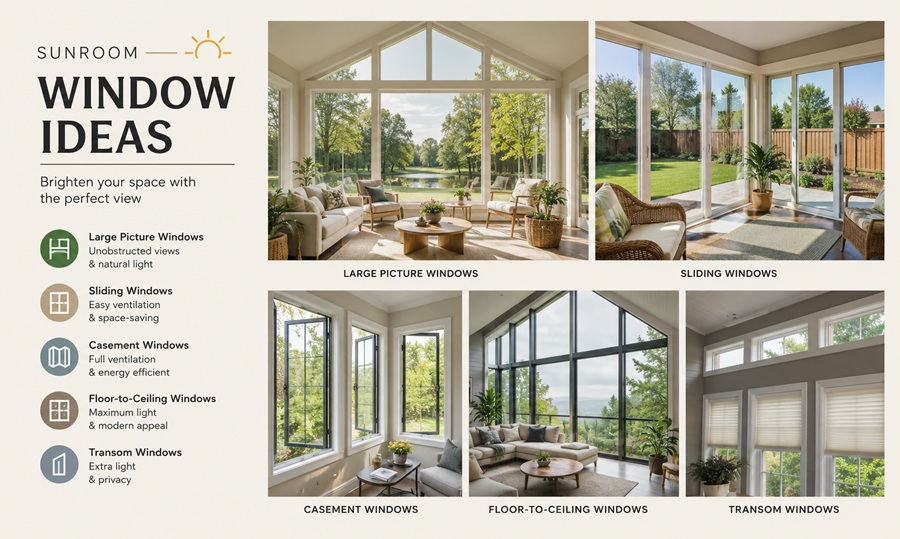

The best sunroom windows balance maximum glass area with energy efficiency, typically using double-pane or triple-pane insulated glass with a low-E coating to reduce heat loss in winter and glare in summer. Sliding or casement windows that open fully are popular for three-season rooms, while fixed insulated glass units work better for four-season sunrooms used year-round.
The problem most sunrooms run into is that a wall of uninsulated single-pane glass, while beautiful, turns the room into an oven in summer and a freezer in winter — making the space unusable for large parts of the year. The right window choice solves this without sacrificing the light and openness a sunroom is built for.
Getting this decision right upfront matters more than almost any other choice in a sunroom project, since windows are both the defining visual feature of the room and the single biggest factor in whether the space actually gets used year-round or sits empty for half the year.
The Problem: Too Much Glass, Not Enough Insulation
Sunrooms are designed around glass, which is exactly what makes them beautiful and exactly what makes them hard to regulate temperature-wise. Single-pane windows, while cheaper upfront, offer almost no insulation, meaning the room swings with outdoor temperatures far more than the rest of the house.
This is the number one complaint homeowners have after a few seasons in a poorly specified sunroom: it’s unusable in July and unusable in January, limiting the room to spring and fall only.
Condensation is another byproduct of poor glass selection, particularly in colder climates. Single-pane glass allows the interior surface to drop close to outdoor temperatures, which causes moisture in the room’s air to condense on the glass — a problem that insulated glass largely eliminates by keeping the interior pane closer to room temperature.
The Solution: Choosing the Right Window Type and Glass
Double-pane or triple-pane insulated glass units, combined with a low-emissivity (low-E) coating, are the baseline for a sunroom meant to be used most of the year. Low-E coatings reflect infrared light, reducing heat transfer without significantly darkening the room. Argon or krypton gas fill between panes adds further insulation value at a moderate cost increase over standard insulated glass.
For window operation, casement windows that crank open provide a tighter seal than sliding windows, improving energy efficiency when closed. Sliding windows are easier to operate for wide openings and remain a popular, cost-effective choice for three-season rooms that don’t need to perform in extreme winter or summer conditions.
Frame material also affects overall performance. Vinyl frames offer good insulation value at a moderate cost, fiberglass frames perform similarly to vinyl but with greater durability and paintability, and aluminum frames, while strong and slim in profile, conduct heat and cold more readily unless they include a thermal break — a design feature that separates the interior and exterior metal to reduce heat transfer.
What’s the Difference Between Three-Season and Four-Season Sunrooms?
Three-season sunrooms are designed for spring, summer, and fall use, often with single-pane or basic double-pane windows and no dedicated heating or cooling system. Four-season sunrooms are built with insulated glass, proper wall and roof insulation, and are typically connected to the home’s HVAC system, allowing use throughout winter as well.
Deciding between the two often comes down to how you plan to use the room. A three-season sunroom used mainly for spring and fall gatherings can be a more budget-friendly addition, while a four-season room intended as year-round living space — a home office, playroom, or additional living room — justifies the higher upfront investment in insulation and mechanical systems.
Regional Considerations for Sunroom Windows
In hot, sunny climates like the Southwest or Southeast, low-E glass with a lower solar heat gain coefficient (SHGC) helps block excess heat while still allowing light in — without it, a south- or west-facing sunroom can become uncomfortably hot even with air conditioning running. In colder Northern climates, triple-pane glass and a higher U-factor rating (indicating better insulation) matter more for keeping heating costs manageable through winter.
In humid coastal regions, corrosion-resistant window frames — vinyl or fiberglass rather than untreated aluminum — hold up better against salt air and moisture over time.
Regardless of region, orientation plays a major role in comfort. South-facing sunrooms receive the most consistent light year-round, east-facing rooms are pleasant in the morning but cool off by afternoon, and west-facing rooms can get intense late-day heat that may need additional shading, regardless of glass quality.
Privacy and Shading Ideas for Sunroom Windows
Cordless cellular shades are a popular choice for sunrooms because they provide insulation value in addition to light control and privacy, unlike standard blinds. For sunrooms facing a neighbor’s yard or a street, frosted or textured privacy glass on lower window panels maintains light while blocking direct sightlines.
Retractable awnings on the exterior can reduce direct solar heat gain before it even reaches the glass, which is often more effective at temperature control than interior shades alone, especially for south-facing rooms.
Exterior solar screens are another option worth considering for particularly sun-exposed sunrooms, since they block a significant percentage of solar heat before it reaches the glass while still allowing a view through to the outside, unlike a fully opaque exterior shade.
Frequently Asked Questions
Do sunroom windows need to be tempered glass?
Many local building codes require tempered (safety) glass for sunroom windows, particularly for large panes near floor level or doors, since it’s designed to break into small, less dangerous pieces if shattered.
How much does it cost to upgrade sunroom windows?
Upgrading from single-pane to insulated double-pane windows typically costs $300 to $800 per window installed, depending on size and frame material, while triple-pane options run higher.
Can a three-season sunroom be converted to four-season use?
Yes, though it typically requires upgrading the windows to insulated glass, adding wall and roof insulation, and extending heating and cooling from the main house or installing a dedicated mini-split system.