
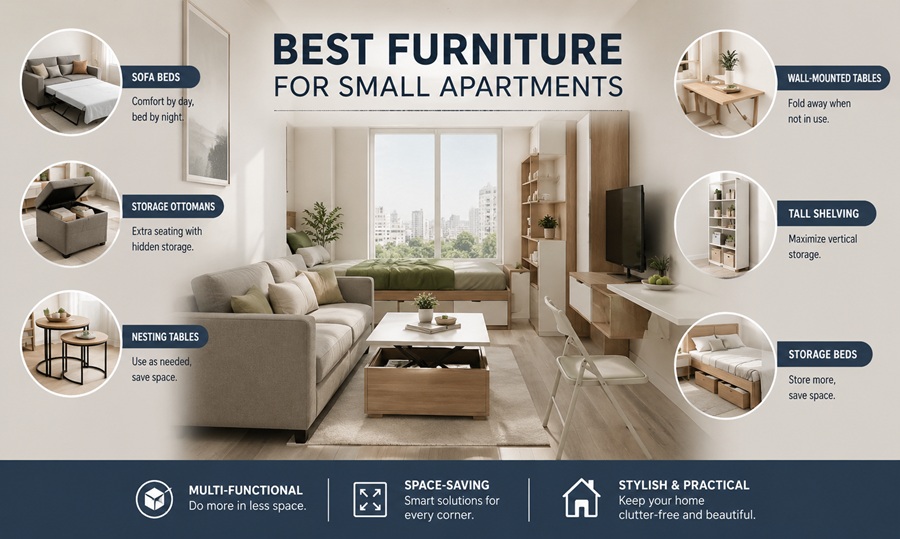

The best furniture for small apartments serves more than one function — a storage ottoman that doubles as a coffee table, a sofa bed for guest sleeping space, or a nesting table set that expands only when needed. Prioritizing furniture with built-in storage and flexible use cuts down on the total number of pieces a small space needs to hold.
Furnishing a small apartment isn’t about buying smaller versions of standard furniture — it’s about choosing pieces that do more than one job, so the space doesn’t feel like it’s being asked to hold more than it can.
This approach also tends to save money over time, since a single well-chosen multifunctional piece often costs less than buying two separate items to achieve the same result, and it reduces the hassle of finding room for extra furniture during a future move.
Checklist: What to Look For in Small-Space Furniture
Look for pieces with built-in storage (ottomans, beds with drawers, benches with lift tops), furniture that folds or nests away when not in use, legs or raised bases that let light pass underneath (which makes a room feel more open), and modular pieces that can be rearranged as your needs change.
Avoid oversized statement pieces that anchor a room but leave little flexibility, and skip furniture with bulky arms or deep proportions that eat into walking space.
Measure doorways and stairwells before buying anything large, since navigating furniture into an apartment can be its own challenge — a sofa that fits the room perfectly is no help if it can’t make it through the front door or around a tight stairwell turn.
Consider modular or knock-down furniture that arrives flat-packed and assembles on-site, which sidesteps doorway and stairwell size issues entirely and also tends to be easier to move again in the future, an added benefit for renters who move more frequently than homeowners.
Furniture Ideas by Room
In the living room, a loveseat or apartment-sized sofa (typically under 72 inches wide) paired with a storage ottoman instead of a traditional coffee table maximizes both seating and storage. Wall-mounted shelving instead of a bulky bookcase keeps floor space open.
In the bedroom, a bed frame with built-in drawer storage eliminates the need for a separate dresser in tight layouts. Nightstands with a single drawer and open shelf underneath offer storage without visual bulk.
In the dining area, a drop-leaf or extendable table that folds down when not hosting guests works well for studio and one-bedroom apartments where a dedicated dining room isn’t an option. Stackable or foldable chairs free up storage space when not in use.
In a home office corner, a slim writing desk with a shallow depth (18 to 24 inches) takes up minimal footprint while still providing a functional work surface, especially when paired with wall-mounted shelving instead of a floor-standing bookcase.
In an entryway, even a narrow one, a slim console table with a drawer or a wall-mounted shelf with hooks underneath gives you a landing spot for keys and mail without requiring a dedicated hallway closet. This small addition often makes the biggest daily difference in how organized a compact apartment feels.
Best Multifunctional Furniture Picks
A sofa bed or daybed serves as seating during the day and sleeping space for guests, eliminating the need for a dedicated guest room. A storage bench at the foot of the bed or by the entryway adds seating and hidden storage in one piece. Nesting tables allow you to have extra surface space on hand for guests without permanently taking up floor space.
A murphy bed is a more significant investment but can effectively convert a bedroom into a home office or living space during the day, which is especially valuable in true studio apartments.
Modular sectional pieces that can be reconfigured or split into individual chairs offer flexibility that a fixed sofa doesn’t, which is particularly useful if you anticipate moving to a different-sized space in the near future and want furniture that can adapt rather than be replaced entirely.
Layout Tips for Small Rooms
Float furniture away from walls when possible rather than pushing everything to the perimeter — this can actually make a small room feel more intentionally designed, as long as walkways stay clear. Choose furniture with exposed legs rather than skirted bases, since visible flooring underneath creates a sense of openness.
Measure walkways before purchasing anything — aim for at least 30 inches of clearance in main walking paths, and 18 to 24 inches between furniture pieces where people don’t need to walk side by side.
Use mirrors strategically to reinforce the sense of space that the right furniture choices create. A large mirror placed opposite a window bounces natural light deeper into the room, which pairs well with furniture chosen for its light, open profile rather than working against it.
Finally, resist the urge to fill every wall. Leaving at least one wall relatively open, even in a small space, gives the eye a place to rest and prevents the room from feeling like storage rather than a place to actually live.
Frequently Asked Questions
What size sofa is best for a small apartment?
Loveseats and apartment-sized sofas under 72 inches wide typically fit small living rooms well while still providing comfortable seating for two to three people.
Is multifunctional furniture worth the extra cost?
Generally yes, since it reduces the total number of pieces a small space needs, often saving money overall compared to buying separate storage furniture and seating or sleeping furniture.
How do I make a small apartment feel bigger with furniture?
Choose furniture with visible legs, keep pieces scaled appropriately to the room, and prioritize multifunctional items that reduce clutter rather than filling every wall with separate pieces.

