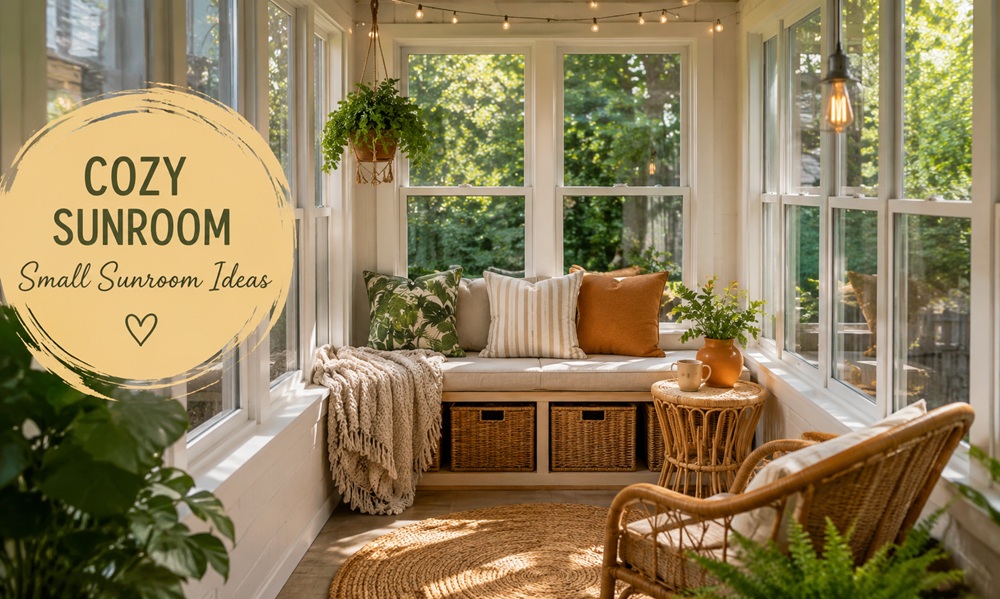

A small sunroom can feel cozy rather than cold by layering soft textiles, choosing furniture scaled to the space, adding warm lighting for evening use, and bringing in plants that thrive in bright, indirect light. Because sunrooms are mostly glass, they can feel exposed or sterile without the right layering, but a few targeted choices go a long way toward making the space feel like a real room rather than a glass box.
The goal with a small sunroom is to soften all that glass and light with texture, without cluttering a space that’s meant to feel open and airy. Getting that balance right is really the whole design challenge.
Quick Answer: What Makes a Sunroom Feel Cozy?
Warmth comes from texture and layering, not size. A small sunroom with a soft rug, a couple of throw pillows, and a warm-toned light source can feel more inviting than a larger, sparsely furnished one. Scale also matters; furniture that’s too large for the room works against the cozy feeling, no matter how nice the individual pieces are.
A Checklist for Furnishing a Small Sunroom
- Choose one or two anchor pieces (a loveseat or two chairs) instead of overcrowding
- Add a rug to soften hard flooring and define the seating area
- Layer in pillows and a throw blanket for texture
- Include at least one plant that tolerates bright, indirect light
- Add a warm-toned lamp for evening ambiance
- Use curtains or a simple shade for glare control and privacy
Furniture That Works in Tight Sunroom Spaces
Small sunrooms usually do best with furniture that’s lighter in scale, like a wicker loveseat, a pair of accent chairs, or a small daybed rather than a bulky sectional. A round or oval side table takes up less visual space than a square one and softens the room’s overall look, which matters more in a room with so many hard, angular window frames already present.
If the sunroom doubles as a reading nook or morning coffee spot, a single comfortable chair with a small side table might be all the room needs, leaving the rest of the space open and uncluttered. Resist the urge to fill every corner; a sunroom’s appeal often comes from the openness itself.
Detailed Guide: Building a Cozy Layout
Start with the seating placement. In most small sunrooms, positioning furniture against the interior wall (rather than blocking window views) keeps the room feeling open while still creating a defined sitting area. Add a rug sized to sit under the front legs of your furniture, which anchors the layout the same way it does in a living room.
Layer lighting next. Sunrooms are bright during the day but can feel stark once the sun goes down, so a warm-toned floor or table lamp makes the space usable well into the evening. String lights along a window frame add a softer, ambient glow for a more relaxed feel, and a dimmer switch, if the room has hardwired lighting, gives even more control over the mood.
Finish with textiles and greenery. Curtains, even sheer ones, soften the hard lines of window frames, and a few plants in varying heights bring life to a room that can otherwise feel like an extension of the outdoors rather than its own space. Grouping two or three plants together, rather than spacing single plants evenly around the room, tends to create a more intentional look.
Tips for Year-Round Comfort
- In colder months, add an extra throw blanket and a small space heater rated for enclosed spaces
- In warmer months, swap heavier textiles for lighter linen fabrics to keep the room from feeling stuffy
- Use removable or washable rugs, since sunrooms see more dust and pollen from nearby windows and doors
- Rotate plants seasonally if the room gets significantly less light in winter
Small adjustments like these mean the room doesn’t need a full redecoration every season, just a few swapped textiles and a check on how the plants are handling the changing light levels.
Flooring also plays a bigger role in a sunroom’s comfort than homeowners often expect. Tile and hardwood look clean but can feel cold underfoot, so a well-placed rug isn’t just decorative; it makes the difference between a room that feels usable in bare feet and one that doesn’t.
Frequently Asked Questions
Can a small sunroom be used year-round?
In most US climates, yes, especially if it’s insulated or has supplemental heating and cooling; true three-season rooms without climate control may only be comfortable spring through fall, and homeowners in colder states often close them off entirely during the coldest winter months.
What colors work best in a small sunroom?
Soft neutrals and warm tones tend to balance the brightness of a glass-heavy room without competing with the natural light, though a single accent color in pillows or a rug adds personality without overwhelming the space. Overly dark or saturated colors can feel out of place against so much natural light and glass.