
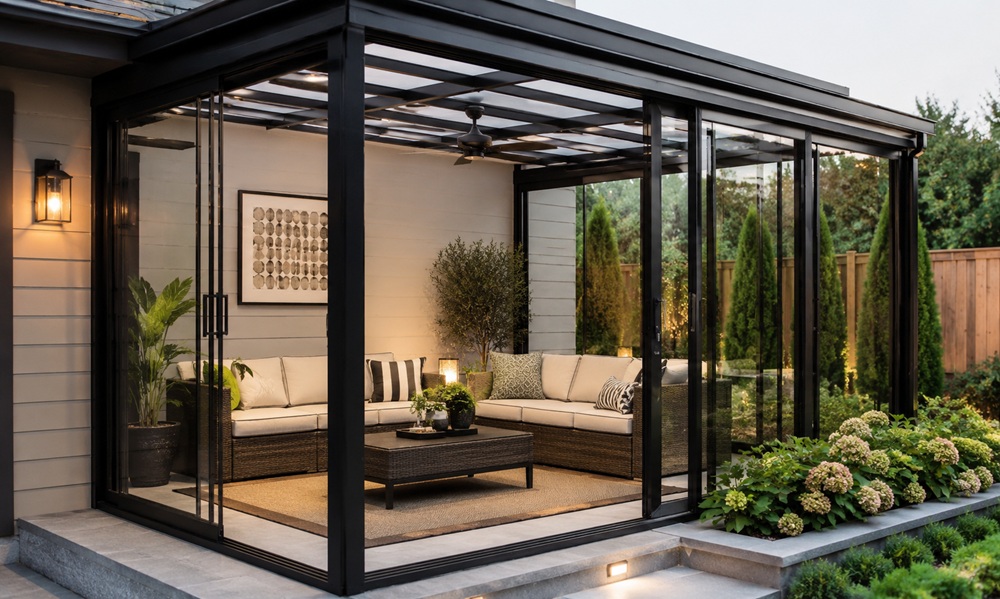

A patio that’s only usable a few months a year is a common frustration for homeowners in much of the US, where rain, bugs, or seasonal temperature swings limit how often the space actually gets used. A patio enclosure solves that by adding a physical barrier, screen, glass, or a retractable system, that extends how many months and hours a day the space stays comfortable.
The right enclosure depends on your climate, budget, and whether you want a casual screened space or a fully insulated room, and choosing the wrong type for your region is one of the most common regrets homeowners run into after installation.
The Problem: Weather Limits Patio Use
Rain cuts outdoor time short with little warning, direct sun makes afternoons uncomfortable in warmer states, and bugs, especially in humid regions, can make evening use nearly impossible without some kind of barrier. Homeowners often invest in nice patio furniture only to find it gets used a fraction of the time they expected, which is usually the moment they start looking into enclosure options.
The Solution: Choosing the Right Enclosure Type
Screened enclosures are the most budget-friendly option, keeping bugs out while still allowing airflow. They’re a good fit for regions with mild winters where full climate control isn’t necessary, and they preserve much of the open-air feeling that draws people outside in the first place.
Glass or vinyl panel enclosures block wind and rain while still letting in light, effectively creating a three-season room. These work well in areas with real seasonal swings, since panels can often be removed or opened in warmer months, giving homeowners flexibility between an open patio feel and a more protected space.
Retractable enclosures use motorized or manual screens and panels that open fully in good weather and close during rain or cooler evenings, offering the most flexibility at a higher price point. This option suits homeowners who want the best of both an open patio and an enclosed room without permanently committing to either.
Fully insulated enclosures turn the patio into a true four-season room with heating and cooling, functioning almost like a home addition rather than an outdoor upgrade. This is the most significant investment of the four options but also the one that adds the most usable square footage to a home year-round.
Regional Considerations Across the US
In the Southeast and Gulf Coast, screened enclosures are especially popular for keeping mosquitoes and humidity-driven bugs out while preserving airflow, since fully sealing the space in a hot, humid climate without air conditioning would make it uncomfortable most of the year. In the Midwest and Northeast, glass or insulated enclosures make more sense given colder winters, since a simple screen won’t add much usable time to the calendar.
In the Southwest, enclosures with retractable shade elements help manage intense summer sun without fully sealing off airflow, since the priority there is often blocking heat and glare rather than keeping out rain or cold.
What Does a Patio Enclosure Cost?
- Screened enclosure: $2,000 to $8,000 depending on size and materials
- Glass or vinyl panel enclosure: $8,000 to $20,000
- Retractable enclosure system: $10,000 to $30,000+
- Fully insulated four-season room: $20,000 to $50,000+, closer to a home addition in cost
Do You Need a Permit for a Patio Enclosure?
In most US municipalities, yes, especially for anything involving electrical work, permanent structures, or changes to the home’s footprint. Screened kits that attach to an existing roofline sometimes fall under simpler permitting, but requirements vary significantly by city and county, so checking with your local building department before starting is worth the time and can prevent costly rework later.
Homeowners associations are another factor that’s easy to overlook. Many HOAs have specific rules about exterior structures, including enclosure materials and colors, so it’s worth reviewing those guidelines alongside city permitting requirements before finalizing a design.
DIY vs Hiring a Professional
Screened enclosure kits are the most realistic DIY option for a handy homeowner, with many prefabricated kits designed for weekend installation. These kits typically come with detailed instructions and pre-cut components, which lowers the skill barrier considerably compared to other enclosure types.
Glass, retractable, and insulated systems generally require professional installation, both for structural integrity and to ensure the electrical and HVAC components, if included, meet code. Attempting these more complex systems without experience often leads to gaps, leaks, or code violations that end up costing more to fix than hiring a professional from the start would have.
Frequently Asked Questions
Can a patio enclosure increase home value?
Yes, particularly glass or insulated enclosures that function as usable living space, though the return varies by region and how well the addition matches the rest of the home’s style and architecture.
How long does installation typically take?
A basic screened kit can be completed in a weekend, while glass or insulated enclosures often take two to six weeks depending on permitting and custom fabrication, with insulated four-season rooms sometimes taking longer if they require foundation or structural work.